
Key Takeaways
- The fix that earns credibility is the one your department already complains about, because somebody is waiting to notice it got done.
- Rank candidates by whether you can finish alone. A fix that stalls after you announced it costs more than the fix you never mentioned.
- Say what you're leaving for later. A named queue reads as judgement. Silence reads as the neglect they've watched before.
Where do the candidates for a quick win come from?
From what you've already heard twice. A department in this state names its own worst problem out loud, to anyone new enough to listen. Working out what you have is its own job, and it hands you a shortlist you never had to invent. Three things on it outrank the rest.
The complaint from more than one person, on different shifts. One technician venting is a bad week. Three people naming the same machine is a pattern the department has learned to work around.
The job that keeps coming back on the same asset. Somebody has fixed it four times this year, every repair was reasonable, and nobody added them up.
The request that went in and never came back. The quietest of the three, because the people who stopped asking also stopped complaining.
Which maintenance manager quick wins actually buy credibility?
The ones with a witness outside the maintenance team. A fix only your own crew can see reads upstairs as maintenance doing maintenance. A fix that ends something production or nursing or the night shift has raised for a year gets reported upward without you saying a word.
B&M Retail cut fault resolution time by 33% once fault reports and repair records lived in one place. The speed came from ending the guesswork about who had been told and what had happened since.
A maintenance director with thirty years on the floor put the condition on that plainly. Mechanics want to turn a wrench, and the resistance is to friction rather than to screens. When raising a job takes one tap instead of nine fields, the technicians who avoided the old system use the new one.
One caution on the first row. Somebody on your crew is known for getting that machine running at 2am, and ending the failure ends the save they get thanked for. Rescuing the line feels good, and retiring that role quietly costs goodwill.
How do you rank the candidates against each other?
By whether you can finish it alone. Every fix on your shortlist leans on somebody: an approval, a contractor, a colleague who owes you nothing yet. The ones that survive when the help disappears are the ones worth announcing.
Four questions sort a shortlist quickly.
- Can you close it if the approval never arrives?
- Will somebody outside maintenance notice it's done, without being told?
- Does it hold while you're on annual leave?
- Can you say it's finished in one sentence, with no hedging?
The same arithmetic runs on you. An announced fix still open six weeks later costs more than the one you kept to yourself, because this department has watched improvements decay before and you've just added another.
What do you do about the fixes you're not doing yet?
Say them out loud, with the reason and the order. The problems you've decided to leave are the ones your crew is most certain you've failed to spot. Naming them turns a backlog into evidence that you're choosing.
Stating your limits earns more trust than covering them. A manager who says which problems are waiting gets taken at their word on the ones they took. Keep it plain: three lines on the maintenance office whiteboard, each with the reason it's waiting.
Grace Healthcare saw the other half of this. Once requests ran through a system, the nurses raising them grew confident a logged issue would get dealt with. The people who noticed sat outside maintenance.
Is putting a system in a quick win or the big change?
It can be a quick win, when you scope it as one. The record behind a fix you're already doing is a small piece of work. The full program is a different project with a different timeline, and this quarter has no room for it.
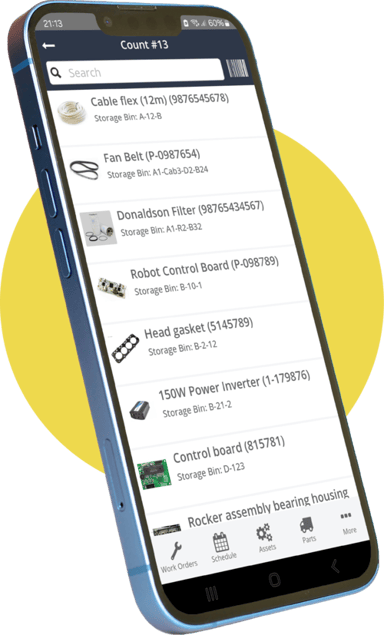
Take the work-request black hole. Closing that loop needs one channel where a request lands, a record of what happened, and an answer back to the person who asked. Scope it to the assets you've already been fixing and it stays that size.
Your recurring failure survived three managers because doing nothing has never had to justify itself. Inertia is free, and a visible fix is the first thing that has made it argue.
Whether the operation needs a system, and how to judge one in front of a vendor, are separate questions. Both wait until the finishing has started.
Every list of maintenance manager quick wins you'll read was written without seeing your plant. Yours has three or four candidates, and you heard all of them in your first month from people who assumed nothing would change. Finishing one in front of the person who raised it buys more than a plan for the whole department ever will. Choose the one you can close alone, say what you're leaving for later, and let the finishing do the talking.
References
- B&M Retail, fault resolution time reduced 33%
- Grace Healthcare, requester confidence that logged issues get dealt with